Pterygium Surgery
About Pterygium
Pterygium is a benign (non-cancerous) growth of tissue on the conjunctiva, the thin membrane that covers the white part of the eye (sclera). It typically starts on the inner corner of the eye near the nose and can extend across the cornea.
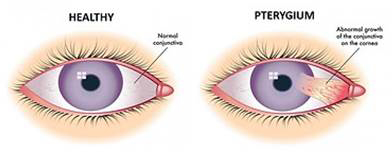
Key Features of Pterygium:
A pterygium appears as a fleshy, triangular-shaped growth that starts at the corner of the eye and may gradually extend onto the cornea. The tissue is often pink or reddish in colour and may cause irritation.
In its early stages, a pterygium may be small and relatively asymptomatic. However, as it grows, it can affect vision by encroaching onto the central part of the cornea.
Symptoms
Irritation: People with pterygium may experience dryness, itching, burning, or a gritty sensation in the eye.
Redness: The affected area may appear red or inflamed.
Blurred vision: If the pterygium grows large enough to extend onto the cornea, it can cause blurred or distorted vision.
Cosmetic concerns: Some individuals may find the growth unsightly, which can affect self-esteem.
Diagnosis
Pterygium is diagnosed through an eye examination where the eye doctor will examine the surface of the eye, looking for signs of the growth. In most cases, it is straightforward to diagnose based on its characteristic appearance.
Treatment
Observation: In many cases, if the pterygium is small and not causing symptoms or affecting vision, no treatment is required. Regular monitoring may be enough.
Medications: For mild symptoms, lubricating eye drops or anti-inflammatory medications (such as corticosteroids) may be prescribed to reduce irritation or inflammation.
Surgical removal: If the pterygium causes significant vision problems, becomes very inflamed, or is cosmetically concerning, surgery may be required. During surgery, the growth is carefully removed, and the exposed area is typically covered with a graft (usually from the patient’s own conjunctiva or from a donor) to prevent recurrence.
Costs
A consultation including comprehensive assessment is at a cost of £350. The cost of any surgical treatment required will be discussed at the consultation appointment.
The Process
1.Patient History
- Discuss symptoms such as eye redness, irritation, dryness or visual changes
- Ask about risk factors like prolonged sun exposure, wind, dust or history of outdoor work
- Note any previous eye conditions or surgeries
2.Visual Acuity Test
- Check the patient’s vision to determine if the pterygium is affecting sight.
3.External Eye Examination
- Inspect the eye to observe the size, shape and location of the pterygium
- Assess any inflammation, redness or vascularisation
4.Slit Lamp Examination
- Use a slit lamp microscope to closely examine the pterygiums characteristics and involvement of the cornea
- Check for any corneal scarring or encroachment on the visual axis
5.Photography (optional)
- Take photos for documentation and monitoring progression over time
6.Additional tests (if required)
- Corneal topography or imaging may be used to assess the effect on corneal shape and vision
7.Diagnosis and Discussion
- Confirm the diagnosis based on findings
- Discuss treatment options ranging from observation and lubricants to surgical removal if vision or comfort is affected.
FAQs
- Wear UV-protective sunglasses
- Use hats or visors when outdoors
- Avoid dusty and windy environments when possible
An eye doctor can diagnose it through a simple eye examination using a slit lamp.
Usually, it is benign and slow-growing but can cause discomfort or vision problems if it covers the pupil.
No, pterygium is not cancerous.
Surgery is usually done under local anesthesia, so you shouldn’t feel pain during the procedure. Mild discomfort afterward is common but manageable.
Symptoms may include redness, irritation, dryness, a feeling of something in the eye, and in advanced cases, blurred vision if it grows over the cornea.
It is commonly caused by prolonged exposure to ultraviolet (UV) light, wind, dust, and dry conditions. It’s more common in people who spend a lot of time outdoors.
A pterygium is a benign (non-cancerous) growth of fleshy tissue on the white part of the eye (conjunctiva) that can extend onto the cornea.
Conservative: Lubricating eye drops, anti-inflammatory drops, and protection from UV light
Surgical: Removal of the pterygium if it causes significant problems or vision impairment
Treatment is recommended if the pterygium causes irritation, affects vision, or grows rapidly.
See why others think we are Kent's leading state-of-the-art eye centrewith trusted reviews from Google and Yell
Sylvia Varrier-Smith
AnthonyK-237
BernieI-3
AvrilW-44
HelenQ-7
GhadifM
LyndaE-63
JeanR-220